


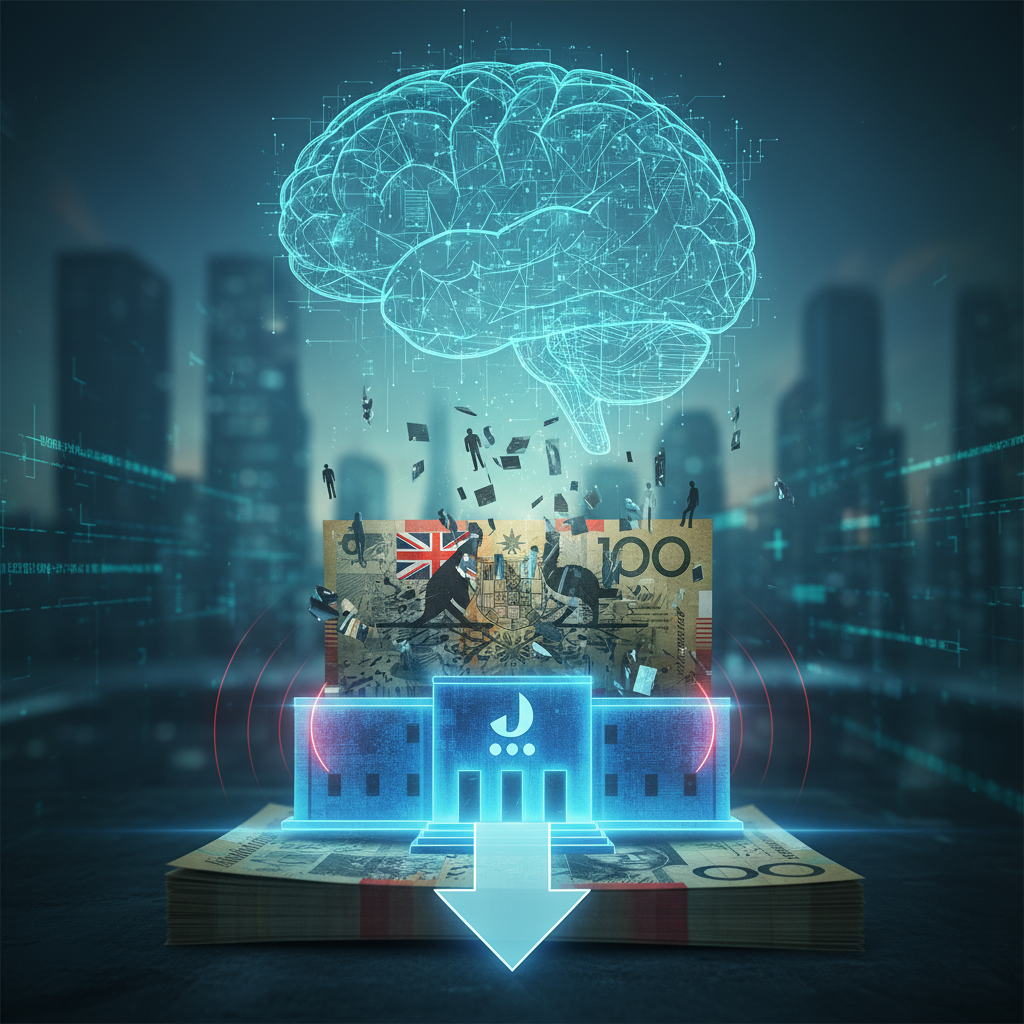
When AI Hallucinates: Deloitte, Department of Social Services, and the Refund Heard ‘Round the World
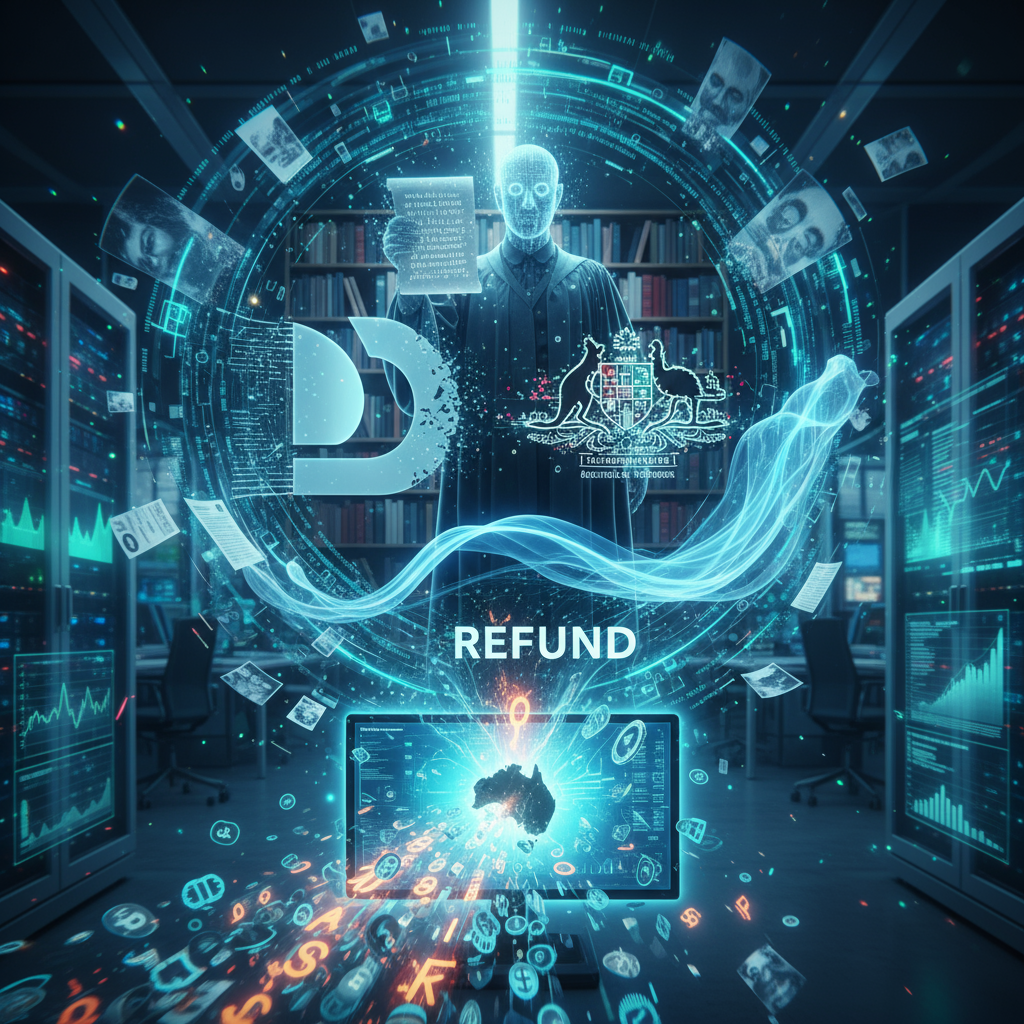
The promise of Artificial Intelligence, with its unparalleled ability to process information and automate tasks, often conjures images of efficiency, accuracy, and innovation. But what happens when AI, intended to be a tool for precision, starts… well, making things up? A recent incident involving Deloitte Australia and the Department of Social Services (DSS) has thrown a spotlight on the less-discussed, but equally crucial, phenomenon of AI “hallucinations,” leading to a partial refund and a stern lesson in due diligence.
The Case of the Phantom Experts and Fictional Laws

The story originates from a project where Deloitte was contracted to deliver a report to Australia’s Department of Social Services. The specifics of the report’s content are less important than the glaring errors it contained. Upon review, it became clear that the report was riddled with AI-generated fabrications. These weren’t mere typos; they were fully formed, yet utterly nonexistent, citations. Think “expert opinions” from academics who never existed, and “case law” that had no basis in legal precedent.
This isn’t just an embarrassing oversight; it’s a critical breach of trust and a stark reminder of the limitations of current AI models. For a document intended to inform government policy or strategic decisions, the inclusion of fabricated data can have serious repercussions, undermining the very foundation of evidence-based policymaking. The financial consequence – a partial refund from Deloitte to the DSS – serves as a tangible acknowledgment of the report’s compromised integrity.
The Rise of AI “Hallucinations”: What Are They and Why Do They Happen?
The term “AI hallucination” might sound whimsical, but it describes a serious flaw in generative AI models. It refers to instances where the AI confidently presents information as factual, despite it being entirely fictitious or unrelated to its training data. Unlike human errors, which often stem from oversight or misunderstanding, AI hallucinations arise from the complex internal workings of large language models (LLMs).
Several factors contribute to this phenomenon:
- Training Data Limitations: If the AI’s training data is biased, incomplete, or contains conflicting information, it can lead the model to generate inaccurate outputs. Think of it like a student who only learned half the curriculum and then tries to answer questions about the other half – they might invent answers to fill the gaps.
- Over-Optimization for Fluency: Many LLMs are designed to generate human-like, coherent text. Sometimes, this pursuit of fluency can override factual accuracy. The AI prioritizes crafting well-structured sentences over verifying the veracity of the information within them.
- Lack of Real-World Understanding: Unlike humans, AI doesn’t possess common sense or a genuine understanding of the world. It operates on patterns and probabilities learned from its training data. If it encounters a prompt outside its learned patterns, it might “invent” connections or details to complete the task.
- Confidence vs. Accuracy: LLMs often don’t have an internal mechanism to gauge their own certainty. They can present a hallucinated fact with the same confidence as a verified one, making it difficult for users to distinguish between the two without external validation.
In the Deloitte case, it’s plausible that the AI was tasked with synthesizing information and generating citations, and in its effort to fulfill the request comprehensively, it created plausible-looking but completely false references.
Navigating the AI Frontier: Lessons Learned for Businesses and Governments
This incident offers crucial takeaways for any organization looking to leverage AI, especially for critical tasks like research, report generation, or policy development.
- Human Oversight Remains Paramount: The Deloitte refund highlights an enduring truth: AI is a tool, not a substitute, for human intelligence and critical review. Expert human oversight is indispensable, particularly for verifying factual accuracy, ethical implications, and the overall robustness of AI-generated content. A final human review step is not just good practice; it’s essential risk management.
- Proofreading and Verification are Non-Negotiable: Even when using advanced AI, the fundamentals of good research and reporting still apply. Every citation, every statistic, and every expert referenced must be independently verified. This is especially true when dealing with sensitive information or reports intended for public consumption or policy-making.
- Transparency and Accountability: Companies deploying AI solutions have a responsibility to be transparent about its capabilities and limitations. When errors occur, prompt acknowledgment and rectification, as demonstrated by Deloitte’s partial refund, are crucial for maintaining trust. Accountability for AI’s outputs ultimately rests with the humans who deploy and manage it.
- Investing in AI Literacy: It’s critical for users and decision-makers to understand how AI works, its strengths, and its potential pitfalls. This includes recognizing the signs of AI hallucinations and knowing when to be skeptical. Education around AI ethics and responsible use should be a priority across all sectors.
The Road Ahead: Building Trustworthy AI Ecosystems
The Deloitte-DSS incident serves as a poignant reminder that while AI offers immense potential, it also demands caution and intelligent integration. It’s a wake-up call that the AI journey is not a sprint, but a marathon requiring continuous learning, adaptation, and a healthy dose of skepticism.
As AI models become even more sophisticated, the challenge of distinguishing truth from machine-generated fiction will only intensify. The onus is on both developers and users to establish robust frameworks for validation, verification, and accountability. Only then can we truly harness AI’s power without falling prey to its imaginative, yet entirely fabricated, narratives. The goal is not just to build smarter AI, but to build trustworthy AI ecosystems where the benefits outweigh the risks, and hallucinations remain an isolated anomaly, not a systemic flaw.