


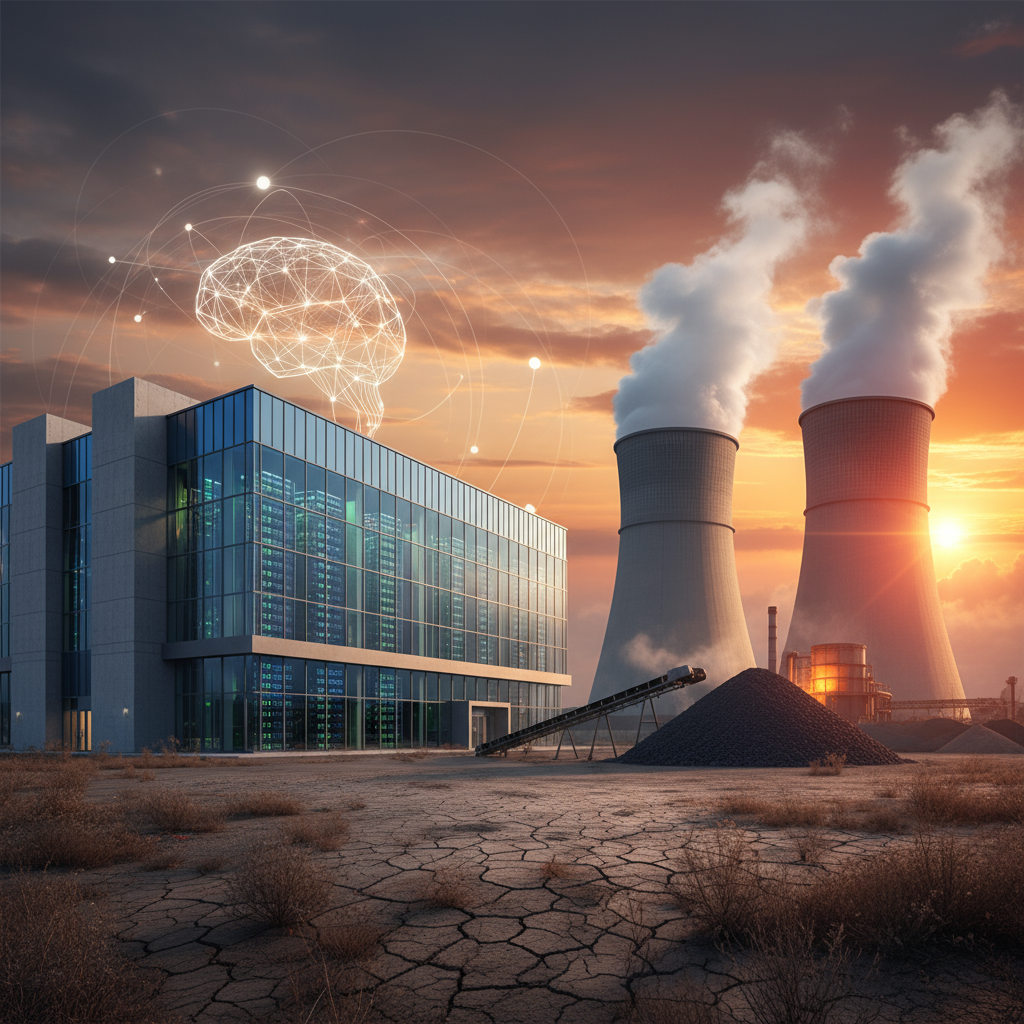
Climate Goals Go Up in Smoke: How US Datacenters Are Turning Back to Coal

Are we truly committed to a sustainable future, or are our digital appetites inadvertently fueling a concerning step backward? While the world increasingly emphasizes renewable energy and decarbonization, a lurking shadow threatens to undermine these efforts: the insatiable demand of US datacenters, which are increasingly turning to coal-fired power. This counterintuitive trend, highlighted by recent reports, exposes a critical flaw in our climate strategies and demands immediate attention.
The Digital Dilemma: Our Growing Thirst for Data

Our lives are intrinsically linked to the digital realm. From streaming high-definition content and powering artificial intelligence to running complex financial systems, datacenters are the silent engines of the modern world. Their energy consumption is staggering and ever-growing. As the demand for cloud services, big data analytics, and generative AI continues its exponential rise, so does the power required to keep these digital behemoths humming.
This escalating demand presents a significant challenge. Datacenters require a constant, reliable, and often massive supply of electricity. While many tech giants have publicly committed to 100% renewable energy targets, the reality on the ground is proving far more complex. The sheer scale of power needed often outstrips the immediate availability of reliable renewable sources, particularly in regions where datacenter development is booming. This creates a dangerous void, one that is increasingly being filled by the very energy source we’re trying to abandon.
The Coal Comeback: A Faustian Bargain?
The idea of datacenters powering down due to energy shortages is simply unthinkable in our interconnected world. To avoid this, and to meet their burgeoning energy needs, some datacenter operators are making a pragmatic, albeit environmentally disastrous, choice: leaning on existing coal infrastructure. This isn’t necessarily about building new coal plants dedicated to datacenters; rather, it’s about increasing the load on existing, often long-amortized, coal-fired power plants to service these energy-intensive facilities.
The implications are dire. Every kilowatt-hour generated by coal releases significant amounts of carbon dioxide and other pollutants into the atmosphere, directly contributing to climate change and air quality degradation. This move effectively negates progress made in other sectors and taints the sustainability image of some of the world’s leading technology companies. It’s a stark reminder that while renewable energy adoption is growing, it’s not yet fast enough or widespread enough to entirely displace fossil fuels, especially when demand surges unexpectedly or in specific geographic areas.
Navigating the Energy Crossroads: Solutions and Accountability
The good news is that this isn’t an insurmountable problem, but it requires concerted effort and a multi-faceted approach. Several strategies can help steer datacenters away from coal and towards a truly sustainable future.
- Increased Investment in Renewable Infrastructure: The most obvious solution is to accelerate the development and deployment of renewable energy projects – solar, wind, geothermal, and hydropower – specifically in regions where datacenter growth is concentrated. This means not just purchasing renewable energy credits, but actively participating in the creation of new clean energy generation capacity.
- Grid Modernization and Storage: A more robust and intelligent electrical grid, coupled with advanced energy storage solutions, can better integrate intermittent renewable sources and ensure a stable power supply for datacenters without relying on fossil fuel backups.
- Energy Efficiency and Optimization: Datacenter operators can continue to innovate in terms of energy efficiency within their facilities. This includes more efficient cooling systems, hardware optimization, and software-defined power management to reduce overall consumption.
- Location-Based Sourcing and Transparency: Companies need to be more transparent about the actual energy mix powering their datacenters and prioritize building new facilities in areas with abundant and reliable renewable energy sources. This requires a deeper level of commitment than simply offsetting emissions.
- Government Policy and Incentives: Policymakers have a crucial role to play in creating a regulatory environment that incentivizes renewable energy adoption for datacenters and disincentivizes reliance on fossil fuels. This could include tax credits, grants, and stricter emissions standards.
Ultimately, accountability rests on both the shoulders of datacenter operators and the consumers of their services. Companies must move beyond symbolic gestures and make tangible commitments to sustainable energy procurement. Consumers, in turn, can demand greater transparency and support companies actively pursuing green energy solutions.
Reigniting Hope for a Sustainable Digital Future
The news of US datacenters turning to coal is a sobering wake-up call. It exposes the fragility of our climate goals when faced with the relentless demands of technological advancement. However, it also presents an opportunity for a course correction. By learning from these setbacks, accelerating renewable energy infrastructure development, enhancing energy efficiency, and fostering greater transparency and accountability, we can still ensure that our digital future is not built upon the ashes of a burning planet. The time for proactive measures is now, before our climate goals truly go up in smoke.