

AI Drones: America’s Newest Cops Soaring into the Future of Law Enforcement
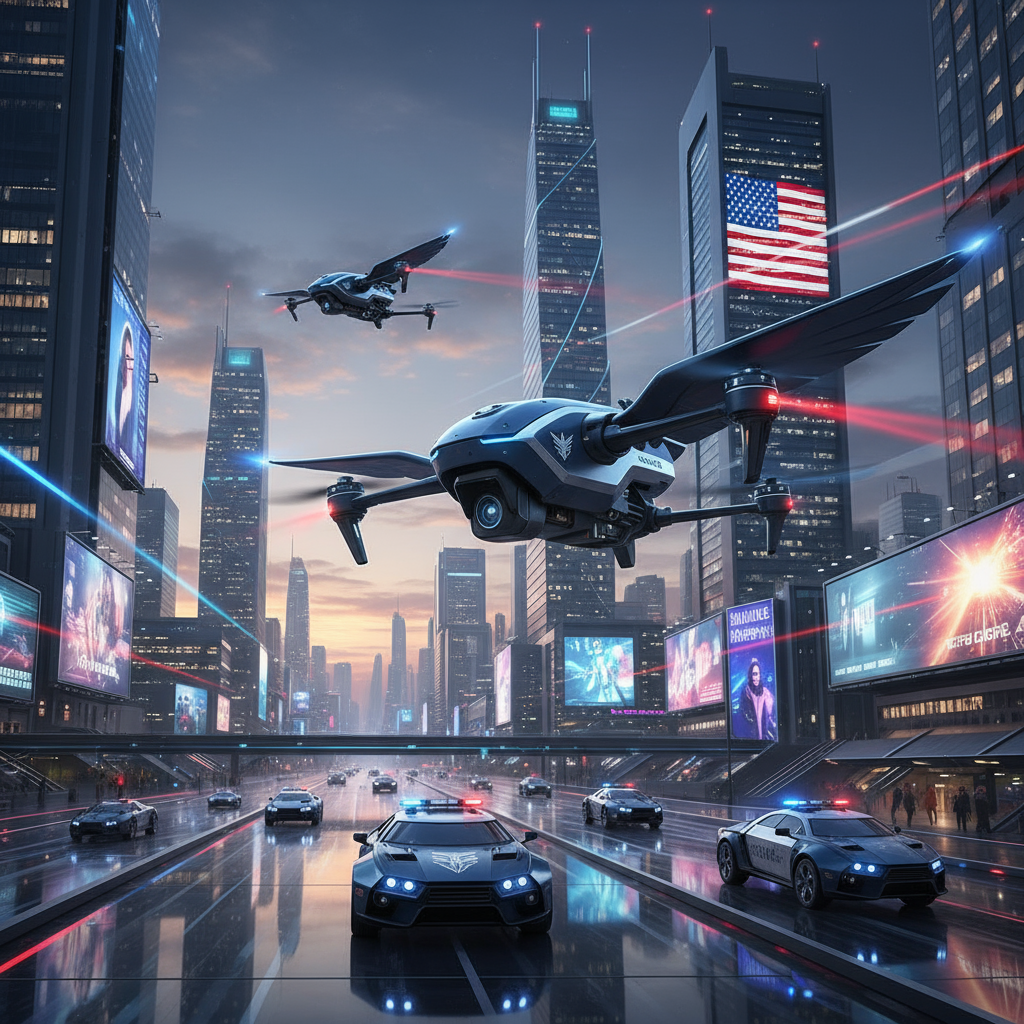
The whirring of propellers in the sky isn’t just a bird anymore; it could be your newest law enforcement officer. From traffic surveillance to emergency response, artificial intelligence-powered drones are rapidly transcending their roles from military marvels to vital tools in America’s police departments. This isn’t a scene from a dystopian sci-fi film, but a burgeoning reality reshaping how we think about safety, privacy, and police work.
For decades, technology has been a cornerstone of policing, from radio communications to forensic science. Now, as AI continues its exponential growth, robotic eyes in the sky are becoming an increasingly common sight, offering capabilities that human officers simply cannot match. What does this mean for our communities, and are we truly ready for a future patrolled by autonomous sentinels? Let’s delve into the evolving landscape of AI drones in American law enforcement.
The Rise of the Robotic Watchmen: Capabilities and Applications

The integration of AI drones into police operations is driven by a desire for enhanced efficiency, improved safety for officers, and more comprehensive crime prevention. These aren’t just remote-controlled toys; modern AI drones are sophisticated machines capable of autonomous flight, object recognition, facial detection (in some cases), and real-time data analysis. Their applications are incredibly diverse, often exceeding what traditional policing methods can achieve.
One significant use case revolves around emergency response. Imagine a 911 call for a potential overdose. Instead of an ambulance getting stuck in traffic, a drone can be dispatched immediately to assess the situation, deliver life-saving naloxone, and provide critical information to first responders en route. This rapid deployment capability can shave crucial minutes off response times, potentially saving lives. Similarly, in active shooter situations, drones equipped with thermal imaging can provide invaluable intelligence, giving officers a clear picture of an active threat inside a building without putting themselves in immediate danger.
Beyond emergencies, drones are proving invaluable in routine police work. They can conduct aerial surveillance of large gatherings, monitor traffic flow, assist in search and rescue operations for missing persons in difficult terrain, and even patrol designated areas autonomously. The ability to cover vast areas quickly and discreetly, without the need for multiple officers or expensive helicopters, makes them an attractive and cost-effective solution for many departments.
Navigating the Ethical Labyrinth: Concerns and Controversies
While the operational benefits of AI drones are compelling, their widespread adoption by law enforcement inevitably raises crucial ethical and societal questions. The primary concern revolves around privacy. The constant surveillance capabilities of these devices, especially when combined with sophisticated AI for facial recognition and behavior analysis, can feel like an unwarranted intrusion into personal lives. How do we balance public safety with the fundamental right to privacy?
Transparency and accountability are also significant issues. If a drone makes an error in judgment, who is responsible? What are the protocols for data storage and access? Without clear guidelines, the potential for misuse of collected data, or even biases in AI algorithms leading to disproportionate surveillance of certain communities, is a real threat. Communities are grappling with the tension between wanting to feel safer and not wanting to feel perpetually watched.
Furthermore, the potential for mission creep remains a worry. Today’s drones might be used for traffic monitoring, but tomorrow’s could be equipped with less-than-lethal weapons or be programmed to autonomously pursue suspects. The public discourse around the “militarization” of police forces only intensifies when considering the deployment of increasingly advanced robotic tools. Establishing clear legal frameworks and public oversight mechanisms is paramount to fostering trust and ensuring responsible deployment.
The Path Forward: Policy, Public Trust, and Training
For AI drones to be successfully integrated into American policing, a multi-faceted approach is required. First and foremost, robust policy and legislative frameworks are essential. These policies must define the permissible uses of drones, specify data retention and access rules, establish clear lines of accountability, and address privacy concerns comprehensively. Public input and community engagement are vital in shaping these policies, ensuring they reflect democratic values rather than just technological capability.
Building and maintaining public trust is equally crucial. Police departments must be transparent about their drone programs, educating the public on their capabilities, limitations, and the safeguards in place to protect civil liberties. Open dialogues, public forums, and clearly communicated best practices can help alleviate fears and foster a sense of shared understanding. Without public buy-in, these technologies risk facing significant backlash and resistance.
Finally, proper training and human oversight cannot be overlooked. While AI automates many functions, human intelligence and ethical judgment remain irreplaceable. Officers operating these drones must be thoroughly trained not only in their technical aspects but also in the ethical considerations surrounding their deployment. Continuous evaluation of drone performance and AI algorithms is also necessary to identify and mitigate any biases or technical flaws.
A Future Redefined: Safer Streets or Surveillance State?
The advent of AI drones as America’s newest cops represents a significant turning point in law enforcement. These technological marvels offer unprecedented opportunities to enhance public safety, improve emergency response, and create more efficient policing. However, they also present profound ethical challenges that demand careful consideration and proactive policy-making.
As these robotic officers take to the skies, the conversation is no longer about if they will be used, but how. By embracing transparency, implementing robust ethical guidelines, and fostering open dialogue with communities, we can harness the transformative power of AI drones to build safer societies without sacrificing the fundamental freedoms we hold dear. The sky’s the limit for what these tools can achieve, but it’s up to us to ensure they soar responsibly.
