

Jerome Powell Sounds the Alarm: Is the AI Hiring Apocalypse Upon Us?
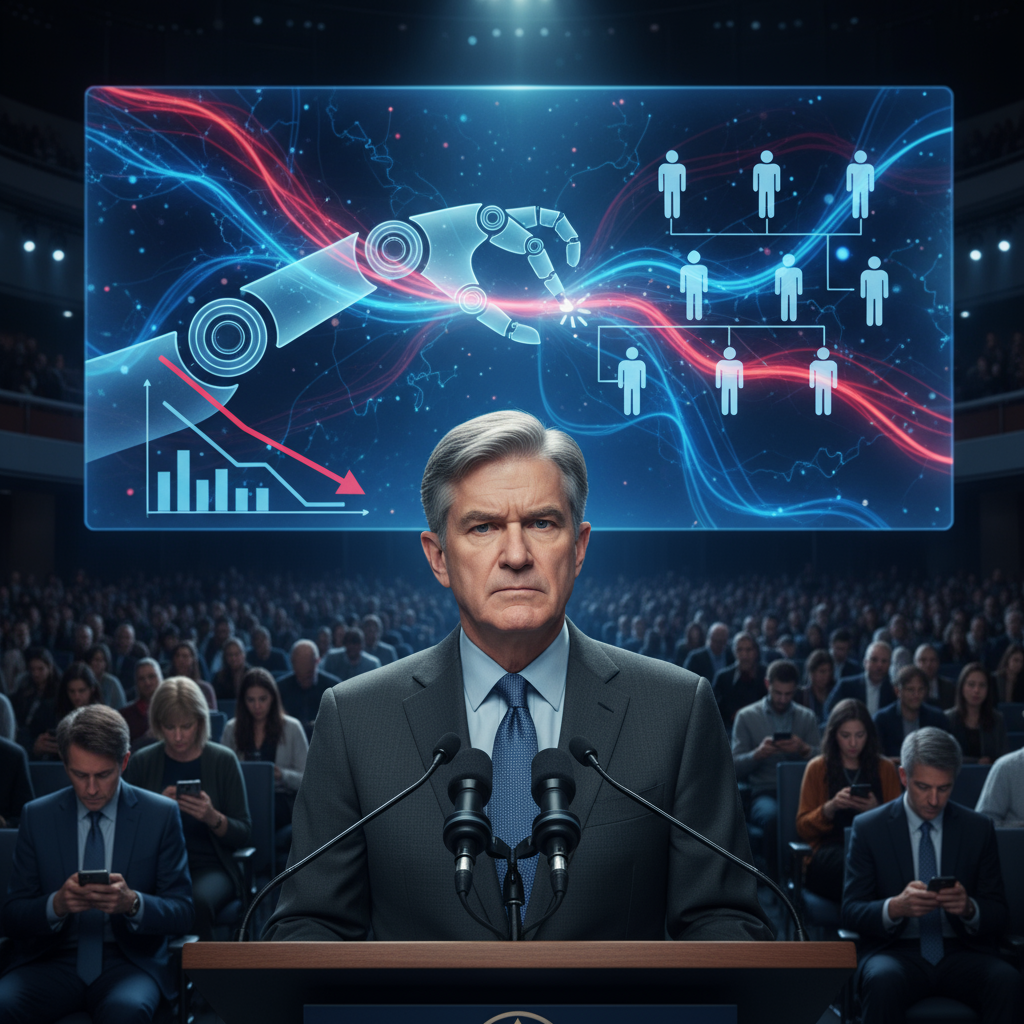
The year is 2025. Headlines scream about a potential AI-driven economic downturn. And the source of this grim prediction? None other than Jerome Powell, Chair of the Federal Reserve. Reports are circulating that Powell has warned that job creation is “pretty close to zero” due to the widespread adoption of artificial intelligence across various industries. Is this the future we feared, where robots and algorithms render human workers obsolete? Let’s delve into the potential reality behind Powell’s unsettling forecast.
The Rise of the Machines: AI’s Impact on the Job Market

The integration of AI into the workplace has been a gradual process, but its acceleration in recent years has been undeniable. From automating repetitive tasks to assisting in complex decision-making, AI has proven its potential to boost efficiency and productivity. However, this progress comes with a concerning side effect: job displacement. Many roles traditionally held by humans are now being taken over by AI-powered systems.
Consider the manufacturing sector. Assembly lines are increasingly populated by robots that can work tirelessly and with unparalleled precision. In customer service, chatbots are handling a significant portion of inquiries, reducing the need for human agents. Even in white-collar professions, AI is making inroads. AI-powered tools can now assist with legal research, financial analysis, and content creation. The question is no longer whether AI will impact the job market, but how drastically and how quickly.
Zero Job Creation: A Dire Prediction or Realistic Possibility?
Powell’s statement that job creation is “pretty close to zero” is a stark warning. It suggests that the pace of technological advancement is outpacing the creation of new jobs to replace those lost to automation. This scenario could lead to widespread unemployment and economic instability.
However, it’s important to consider alternative perspectives. Some argue that AI will ultimately create more jobs than it destroys. The argument is that while certain roles will become obsolete, new industries and opportunities will emerge around the development, implementation, and maintenance of AI systems. Think of the demand for AI engineers, data scientists, and AI ethicists. Furthermore, it’s argued that AI will augment human capabilities, allowing workers to focus on more creative and strategic tasks, boosting overall productivity and generating new economic value.
The reality likely lies somewhere in between these two extremes. The key will be proactive adaptation and investment in education and training programs that equip workers with the skills needed to thrive in an AI-driven economy. Without such efforts, Powell’s prediction of near-zero job creation could become a self-fulfilling prophecy.
Navigating the AI Transition: What Can Be Done?
If Powell’s assessment is accurate, what steps can individuals, businesses, and governments take to mitigate the negative consequences of the AI hiring apocalypse? The answer lies in a multi-faceted approach that focuses on reskilling, adaptation, and proactive policymaking.
First and foremost, investing in education and training is crucial. Workers need to acquire skills that are complementary to AI, such as critical thinking, problem-solving, and creativity. These are skills that AI is unlikely to replicate in the near future. Governments and businesses should partner to provide accessible and affordable training programs that cater to the needs of a changing workforce.
Secondly, businesses need to rethink their workforce strategies. Instead of simply replacing human workers with AI, they should explore ways to integrate AI into existing roles to enhance productivity and efficiency. This could involve providing employees with training on how to use AI tools effectively or redesigning jobs to focus on tasks that require uniquely human skills.
Finally, governments need to play a more active role in shaping the future of work. This could involve implementing policies that support reskilling and upskilling initiatives, providing a safety net for workers who are displaced by automation, and exploring new economic models, such as universal basic income, to address potential income inequality.
The Future of Work: Adaptation is Key
Jerome Powell’s warning about the AI hiring apocalypse is a wake-up call. While the full extent of AI’s impact on the job market remains uncertain, it’s clear that significant changes are underway. The key to navigating this transition successfully lies in adaptation. By investing in education, rethinking workforce strategies, and implementing proactive policies, we can mitigate the risks and harness the potential of AI to create a more prosperous and equitable future for all. The future of work is not about humans versus machines, but about humans and machines working together. Are we ready for that future?
